
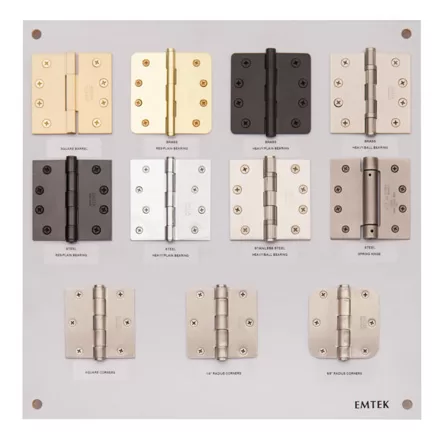
Of all the decisions in a renovation, hardware finish is one of the easiest to leave until last — and one of the easiest to get wrong when it’s rushed. It’s a small physical object, but it’s also one of the most-touched, most-looked-at details in the whole house. Here’s how the major finishes read, and how to choose one that pulls your renovation together instead of quietly working against it.
Why Hardware Finish Matters More Than Its Size Suggests
Door handles, hinges, and locksets are handled constantly and sit at eye level near every doorway in the home. Get the finish right and it barely registers — it just feels like it belongs. Get it wrong, and it becomes one of those small details that keeps catching your eye without you quite knowing why the room feels slightly off.
Matte Black: The Modern Default
Matte black has become the go-to finish for modern and contemporary renovations, and for good reason — it reads as clean, graphic, and low-maintenance (no polishing required to keep it looking sharp). It pairs especially well with black window frames, dark fixtures, and the kind of high-contrast palettes common in West Coast contemporary and modern farmhouse renovations. On a more traditional or heritage home, though, matte black can look slightly out of place if the rest of the details lean ornate.
Brushed Nickel: The Safe, Versatile Middle Ground
Brushed nickel sits comfortably between modern and traditional, which makes it one of the most forgiving choices if you’re not entirely sure which direction the rest of the home’s finishes are heading. It has a soft, low-glare sheen rather than the mirror shine of polished chrome, and it pairs well with both cooler and warmer palettes. It’s a strong choice for transitional renovations that blend older bones with updated finishes.
Brass: Back in a Big Way
Brass — especially warm, slightly aged or “unlacquered” brass rather than the shiny polished brass of decades past — has made a real comeback, particularly in character and heritage home renovations. It brings warmth and a sense of history that matte black doesn’t, and it pairs beautifully with wood tones, cream and warm white palettes, and traditional panel doors. The key is committing to it throughout the home rather than mixing it awkwardly with cooler finishes.
Polished Chrome: Increasingly Rare, But Not Gone
Polished chrome has fallen out of favour over the last several years in favour of the softer, more matte finishes above, but it still has a place in specific modern or minimalist renovations where a crisp, reflective finish is the intended look.
The One Rule That Matters Most: Consistency
The single biggest hardware mistake isn’t choosing the “wrong” finish — it’s mixing finishes without a clear reason. Black door hardware paired with brass light fixtures and chrome bathroom faucets reads as unplanned, even if each piece is nice on its own. The strongest-looking renovations pick one primary finish and carry it through door hardware, light fixtures, and cabinet hardware consistently, with at most one deliberate accent finish used sparingly.
Matching Hardware to Door Style
Hardware finish and door style work together, not separately. A heavily panelled traditional door with sleek matte black hardware can look like two different decisions bolted together, just as an ultra-modern flush door with ornate brass hardware can feel similarly mismatched. Our style guides in the Resources section of our website pair hardware finish recommendations with each door style, which is worth a look before finalizing your order.
Ready to talk about your renovation? Email us at info@a1doors.ca and we’ll help you find the right doors and hardware for your project.