
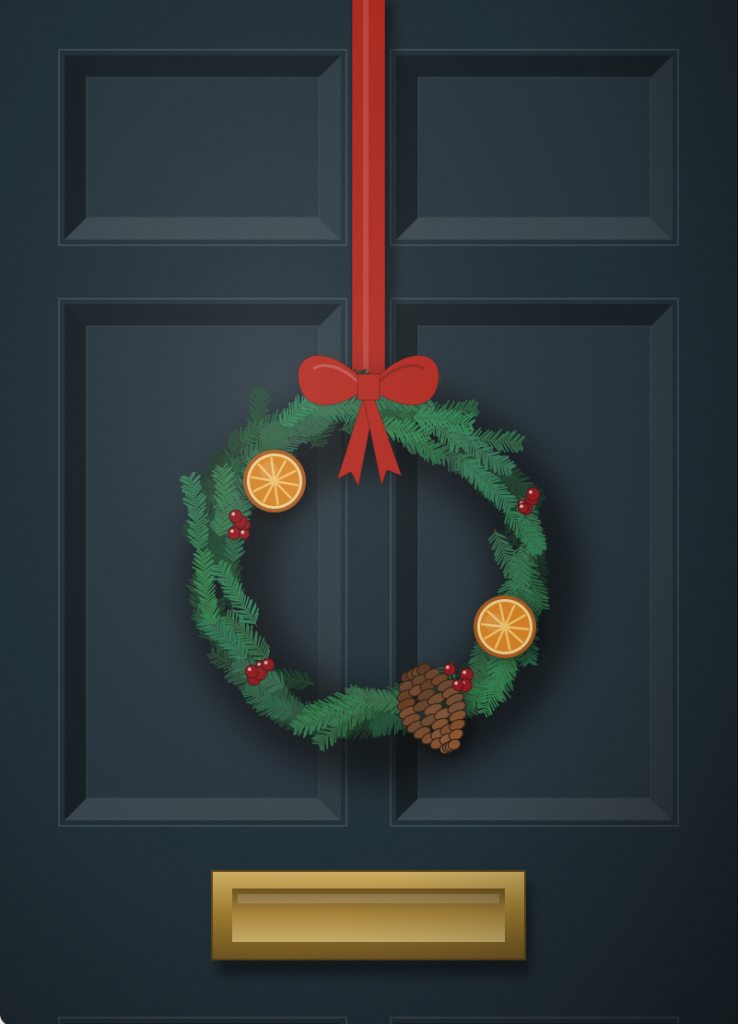
Before you hang that wreath, read this!
A wreath is a small thing. But the wrong hanger can leave scratches, peel paint, crush your weatherstripping or let cold air in all winter. The right choice depends on your door: what it’s made of, what hardware is on it and how much weather it sees.
Here’s how to pick a method that looks good and leaves your door in good shape in January.
The four main options
| Method | Best for | Watch out for |
|---|---|---|
| Over-the-door hanger | Most doors, heavier wreaths | Crushed weatherstripping, scratches on the top edge |
| Removable adhesive hook | Smooth painted steel or fiberglass | Cold weather, textured or freshly painted surfaces |
| Ribbon | Light wreaths, a classic look | Fraying, fading and dye bleeding when wet |
| Magnetic hanger | Steel doors only | Grit under the magnet, sliding in wind |
Over-the-door hangers
These hook over the top of the door and are the most common choice. They hold heavier wreaths and need no tools.
The catch is the top edge. When the door closes, the hanger sits between the door and the frame. On an exterior door, that can press into the weatherstripping and leave a gap for drafts and water. A metal hanger can also rub through the paint on the top edge.
Tip: Choose a slim, flat hanger with a padded or rubber-coated back. After you hang it, close the door and make sure it still latches snugly with no daylight showing at the top.
Removable adhesive hooks
Adhesive hooks keep everything off the door edge, so your weatherstripping stays untouched. They work best on smooth, painted steel or smooth fiberglass.
They’re less reliable on textured fiberglass, raw or stained wood, and in cold weather. Adhesive needs mild temperatures to bond, so check the temperature range on the package. Never use them on fresh paint. Give a newly painted door several weeks to cure first, or the hook can pull the paint off with it.
Tip: Check the weight rating, and choose a hook rated for more than your wreath weighs. When the season is over, remove it slowly using the release tab. Don’t pry it off.
Ribbon
A wide ribbon looped over the top of the door is gentle on the finish and puts very little pressure on the weatherstripping. It also looks great.
Secure the ribbon on the inside of the door with a small removable hook, not a tack or nail. Outdoors, ribbon can fade, fray or bleed dye when it gets wet. That’s a real risk on a white or light-coloured door. Choose a weather-resistant ribbon if your door isn’t covered.
Magnetic hangers
Magnetic hangers are a clean option, but they only work on steel doors. They won’t hold on wood, fiberglass or glass.
Any dirt or grit trapped under the magnet can scratch the paint as it shifts. Wipe the door clean first, and pick a hanger with a rubber or felt backing. Strong wind can slide a magnet down the door, so check the weight rating.
Not sure what your door is made of? Try a fridge magnet. If it sticks, it’s steel. If not, it’s likely wood or fiberglass.
Match the method to your door material
- Steel: Most flexible. Magnetic hangers, adhesive hooks and over-the-door hangers all work well.
- Smooth fiberglass: Adhesive hooks or a padded over-the-door hanger. No magnets.
- Textured (woodgrain) fiberglass: Adhesive struggles to grip the texture. Use a padded over-the-door hanger or ribbon.
- Wood: The most sensitive to scratches and moisture. Use ribbon or a padded over-the-door hanger. Avoid adhesive on stained or oiled finishes.
- Glass lites: A suction-cup hanger can work on clean, smooth glass. Don’t use adhesive on decorative or textured glass.
Check your hardware clearance
Before you settle on a spot, open and close the door a few times. Your wreath should clear:
- The handleset, lever or knob, with room for your hand
- The deadbolt and keyhole
- The peephole, if you use it
- A door knocker or mail slot
Don’t hang a wreath from the door knocker. The weight and movement can loosen it or mark the door around it.
Think about the weather
- Wind: A wreath that swings will rub the finish every time it moves. Add a few felt pads or small clear bumpers to the back so it sits off the surface.
- Rain and moisture: A wet wreath held against the door for weeks can mark the finish, especially on wood. Fresh greenery can also drip sap. A covered porch helps.
- Sun: On a wood door in full sun, the area behind the wreath can fade less than the rest of the door. Take it down promptly after the season to keep the colour even.
- Storm doors: If you have a storm door, make sure the wreath fits in the gap without being crushed. On a sunny exposure, glass storm doors can trap heat, which is hard on both the wreath and the door finish.
Protect the finish
- Wipe the door clean before you hang anything.
- Put felt pads on any part of the hanger or wreath that touches the door.
- Never use nails, screws or thumbtacks in the door.
- Check the door every week or two, especially after wind or rain.
- Take the wreath down promptly after the holidays, and clean the area behind it.
Simple rule: nothing hard, wet or gritty should rest against your door for weeks at a time.
Questions about your door?
Not sure what your door is made of, or what it can handle? We’re happy to help. And if your front door is ready for an update, visit our Surrey showroom to compare styles, finishes and hardware in person. Email us at info@a1doors.ca.
Still choosing a wreath? See our guide: What Size Wreath Fits Your Front Door?