
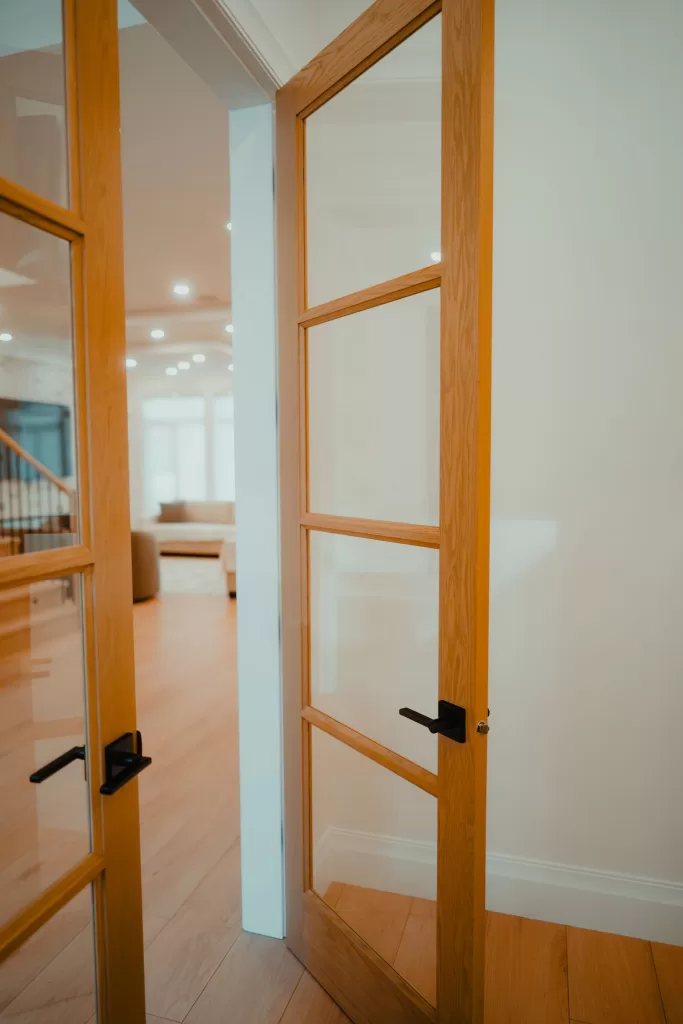
Not every renovation budget stretches to replacing every door in the house — and it doesn’t need to. If there’s one upgrade that consistently punches above its cost, it’s adding a French door or two in the right spot. It’s one of the few changes that reads less like a repair and more like a genuine architectural feature.
Why French Doors Feel So Different
Most interior doors do one job: they close off a room. French doors do something else entirely — they let a space stay open and connected while still offering the option to close it off. That combination of light, sightlines, and flexibility is what gives a home a sense of openness that a solid door simply can’t offer, even in rooms that aren’t especially large.
There’s also something about the proportions and detailing of a French door — the divided glass panes, the symmetry, the sense of a threshold rather than just a barrier — that reads as intentional and considered. It’s a detail people notice, even if they can’t always articulate why the room feels different.
Where French Doors Make the Biggest Impact
Dining rooms and home offices. A French door between a dining room or office and the rest of the main floor keeps the space feeling connected day to day, while still offering privacy and sound separation when it’s needed — for a dinner party, or a work call.
Between kitchen and living spaces. In older homes with more segmented floor plans, a French door can soften the closed-off feeling of a separate kitchen without the cost and disruption of a full wall removal.
Primary bedroom entries. A pair of French doors leading into a primary suite can make even a modest-sized bedroom feel more like a genuine retreat, adding a sense of arrival that a standard door doesn’t provide.
Home offices and dens. With more people working from home at least part of the week, a French door on a home office lets natural light and sightlines through the rest of the main floor while still allowing the door to close for calls and focus time.
Sunrooms and garden-facing rooms. Any room that opens toward natural light or a view benefits enormously from French doors — they frame the outdoors rather than blocking it off.
You Don’t Need to Replace Every Door to Make an Impact
This is the real appeal for a lot of homeowners: French doors don’t need to be a whole-house decision. Swapping just one or two strategically placed doors — a dining room entry, a home office, a primary bedroom — can visibly elevate a renovation’s overall feel, even while the rest of the home’s doors stay exactly as they are. It’s one of the highest-impact, lowest-disruption upgrades available in a renovation.
A Few Practical Considerations
French doors take up swing space that a standard door doesn’t always require, so it’s worth confirming there’s enough clearance in the room before committing. Glass style also matters: full divided-lite panes read as more traditional, while simpler glass configurations suit more modern renovations. And for rooms where privacy matters, frosted or textured glass options exist without giving up the light and openness that make French doors worth adding in the first place.
For style pairing and glass options that suit your home, our style guides in the Resources section of our website go into more detail on choosing the right French door configuration for your space.
Ready to talk about your renovation? Email us at info@a1doors.ca and we’ll help you find the right doors for your project.