
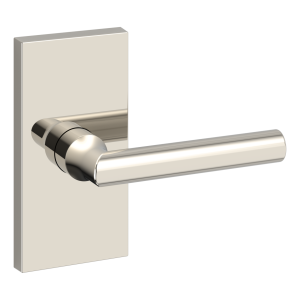
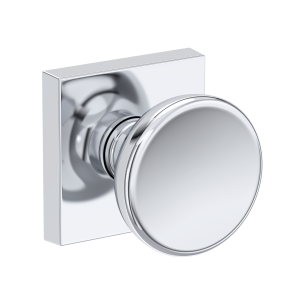
You touch your door hardware dozens of times a day, yet most people only think about it when it’s time to choose. Levers and knobs both work well. The better choice depends on who lives in your home, how each room is used, and the look you want.
Here’s a straight comparison to help you decide.
Levers vs. knobs at a glance
| Levers | Knobs | |
|---|---|---|
| Comfort | Press down with a hand, wrist or elbow | Needs a firm grip and a twist |
| Accessibility | Easier for most people | Harder with arthritis or weak grip |
| Look | Clean, modern, architectural | Classic, traditional, softer |
| Ease of use | Opens with full hands | Needs a free hand |
| Child safety | Small kids and pets can open them | Harder for toddlers to turn |
Comfort
A lever turns with a light push. There’s no gripping or twisting, so it feels easy every time. Knobs need a firmer hold. For most adults that’s no problem, but you’ll notice the difference after a long day or with sore hands.
Accessibility
Levers are the clear winner here. They work for people with arthritis, limited hand strength or mobility challenges, and for anyone using a walker or wheelchair. That’s why accessible design standards generally call for lever-style hardware.
If you’re planning to stay in your home long term, or you share it with parents or grandparents, levers are a choice that keeps working as needs change.
Aesthetics
Levers have a clean, architectural line. They suit modern, West Coast contemporary and transitional homes especially well. Knobs bring a softer, classic feel that fits traditional, heritage and farmhouse-style spaces.
Both come in every popular finish, from matte black to brushed nickel to warm brass. The key is consistency: pick one style and finish and carry it through the home so everything feels connected.
Ease of operation
Try opening a door while carrying groceries, laundry or a sleeping child. A lever lets you push down with your elbow. A knob needs a free hand.
The trade-off: levers stick out a little more. In tight hallways they can catch a sleeve or a bag strap. Knobs keep a lower profile.
Which one suits each room?
- Front entry: A handleset with a lever or thumb latch handles daily traffic and makes a strong first impression.
- Bedrooms and bathrooms: Levers with a privacy function are easy to use, including at night.
- Laundry, mudroom and garage entry: Levers, since your hands are often full.
- Kids’ rooms and playrooms: Knobs can slow down curious toddlers.
- Rooms you want to keep pets out of: Knobs. Some dogs learn to open levers.
- Closets and pantries: Either works. Many homes use passage or dummy hardware here to match the rest of the house.
- Seniors’ suites and secondary suites: Levers, for accessibility and long-term comfort.
So, which is better?
For most homes, levers are the more practical everyday choice. They’re more comfortable, more accessible and easier to use with full hands. Knobs still make sense where you want a traditional look or a little extra protection from small hands and paws.
You don’t have to choose one for the whole house. Many homeowners use levers in high-traffic rooms and knobs in a few select spots, all in the same finish.
One detail to check before you buy: some levers are handed, meaning they’re made for a left- or right-swing door. Many are reversible. Our team can help you confirm what you need.
See and feel the difference in person
Hardware is easier to choose when you can hold it. Visit our Surrey showroom to compare levers and knobs from brands like Emtek, Baldwin and Weiser, and see how each pairs with your doors and trim.
Have questions about your project? Email us at info@a1doors.ca and our team will help you find the right fit.