
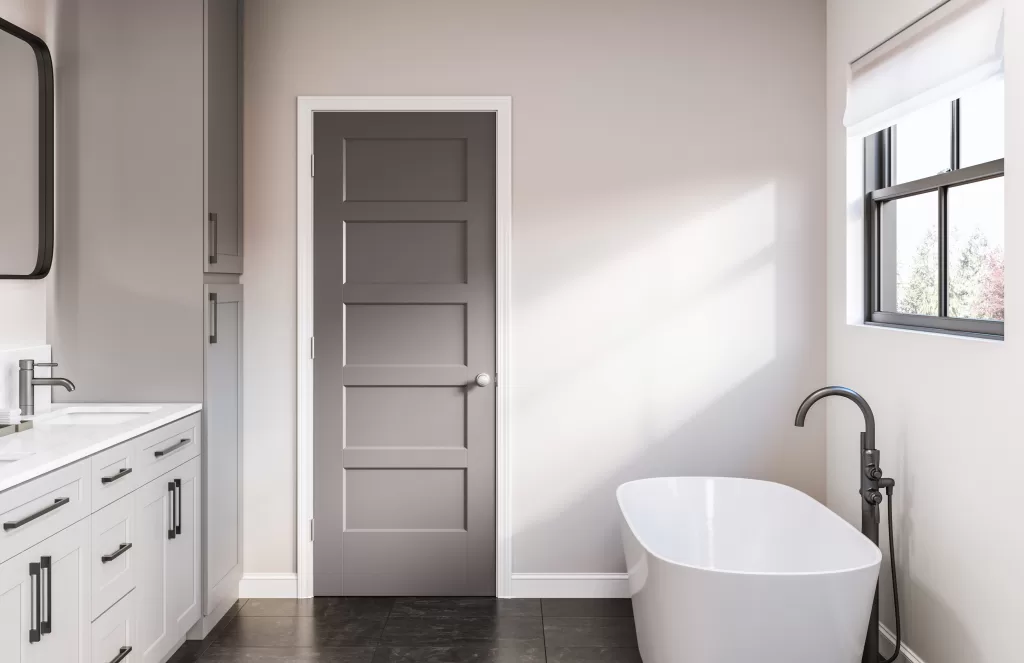
A fresh coat of paint can hide a lot — but it can’t fix everything. And often, it’s the small things we walk past every day — a door that sticks, a handle that never quite feels right — that quietly affect how at home a space feels. If you’re planning a renovation in Surrey or anywhere across the Lower Mainland, it’s worth knowing when a door needs a full replacement instead of a touch-up. Here’s how to tell the difference.
- The Door Doesn’t Close or Latch Properly
If you’re wrestling with a door every time you walk through it — lifting it, slamming it, or jiggling the handle to get the latch to catch — that’s usually a sign of a warped slab or a frame that’s shifted, not a hardware problem. Repainting won’t fix a door that’s out of square.
- Visible Warping, Swelling, or Cracking
Older hollow-core doors, especially in bathrooms or near exterior walls, tend to swell and warp with humidity changes over the years. Once a door has visibly bowed, no amount of sanding and repainting will bring it back flat. This is one of the most common issues we see on renovation walkthroughs across Surrey homes built in the 80s and 90s.
- It’s Just a Cheap Hollow-Core Door
Many homes built during high-volume construction years were fitted with basic hollow-core doors throughout. They’re light, they dent easily, and they don’t do much for sound or insulation between rooms. If you’re already renovating, upgrading to a solid-core or moulded panel door is one of the most noticeable finish upgrades you can make, and it’s often more affordable than homeowners expect.
- The Style Doesn’t Match Your Renovation
A house going through a full renovation in the Lower Mainland often ends up with a mismatch: new flooring, new trim, new paint colours — and the same tired flat-panel doors from 1995. Doors and mouldings are part of the overall look and feel of a room, and a mismatch like this can keep a freshly renovated space from feeling truly finished. If everything else is being updated, the doors should be too.
- Damage Around Hinges, Locks, or the Bottom of the Door
Cracked wood around a hinge, a chewed-up strike plate area, or water damage at the base of the door (common in older bathrooms and basements) are all structural issues. These are safety and function problems, not cosmetic ones, and they’re not solvable with paint.
Renovating? Let’s Talk Doors First
Doors and trim are one of the easier lines to nail down early in a renovation, and getting it right sets the tone for the rest of the finishing work — and for how the finished room feels to come home to. Whether you’re doing one room or the whole house, we work with homeowners across Surrey and the Lower Mainland to find the right doors, style, and sizing for the project.
Ready to talk about your renovation? Email us at info@a1doors.ca and we’ll help you find the right doors for your project.